

The pyrotechnic composition of a firework, the mixture that produces its colours, light, smoke and sound, consists of black powder and numerous other mixtures that themselves contain the oxygen and fuel needed for combustion. The mixtures also contain elements that produce light in different colours as they burn, along with various binders, burn catalysts and stabilisers, so that the compositions work as intended and remain usable for a long time.
Over the years, pyrotechnic compositions themselves have become considerably less toxic and safer for the environment. The REACH Regulation prohibits, among other things, the use of hazardous lead (the crackling composition of old) and arsenic in products, as well as the sale and placing on the market of such products. Carcinogenic substances, such as chlorinated aromatic hydrocarbons, have not been permitted in the compositions for years. We are talking here about fireworks imported into Europe and those made in Europe. The fireworks used here are CE marked.
When a firework burns, most of its pyrotechnic composition turns into the same gases that are normally present in the atmosphere. Most of the reaction products are gaseous compounds: carbon dioxide, water vapour and nitrogen. The rest goes through fierce combustion (1,000–4,000 degrees Celsius), in which the metals are released in their most stable forms: the same forms in which they are found in nature, for example in minerals, and not in a readily bioavailable form. The combustion residues of fireworks are “safe” in the sense that the heat is intense, so harmful organic substances are destroyed. The fine particles produced by road traffic, for example, contain cancer-causing particles as a result of incomplete combustion, as well as particles that are hazardous to the environment. With fireworks, by contrast, the temperature is high enough to destroy them and render them harmless. The metals in the fine particles left by burning fireworks are in a form that is, in practice, not absorbed by the human body and does not damage nature. A campfire, for example, produces harmful substances such as carbon monoxide, sulphur compounds and cyanide in toxic concentrations. Thanks to the combustion temperature of fireworks, the concentration of these toxic substances is negligible compared with a campfire or car exhaust. As far as fine particles are concerned, it makes no practical difference which colours or effects the fireworks contain, provided they are made in accordance with current regulations. The environment thanks fireworks for being relatively harmless fun compared with many other amusements.
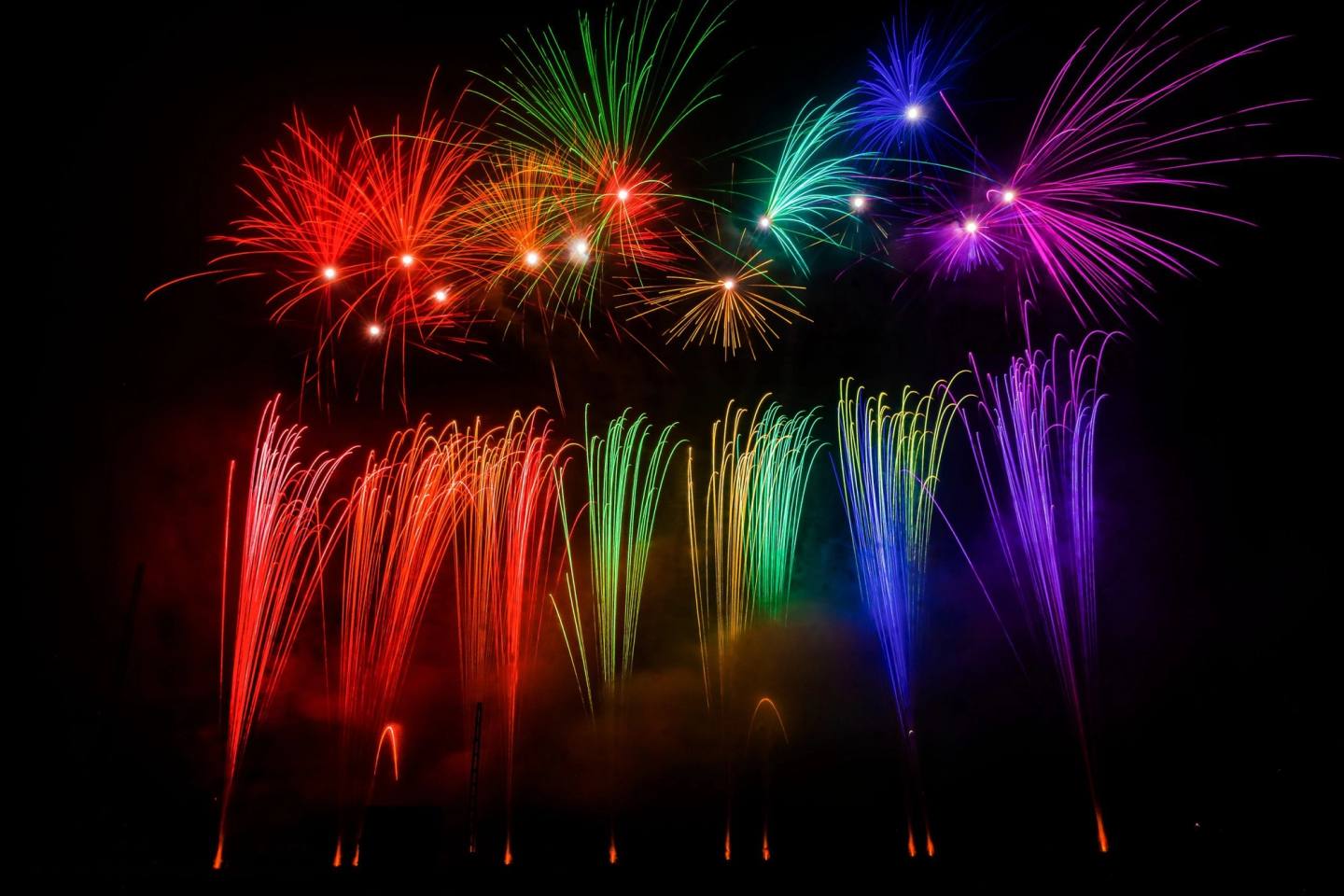
The very small amounts of strong-smelling hydrogen sulphide released by black powder are quickly converted into harmless substances in the atmosphere. Because of the intense heat, the combustion products contain very few of the much-debated PAH compounds. The remaining substances are released as inorganic compounds, either as fine particles or as larger ones. Chlorine-based oxidisers are converted into chlorides, the same substances that occur naturally in seawater. The compounds of barium, the green colourant in pyrotechnics, are converted into barium carbonate and sulphate and other very poorly soluble compounds. The compounds of strontium, the red colourant, are not particularly harmful to the environment or to health, and the yellow colourant, sodium, is a constituent of table salt. Copper from blue effects and crackling compositions is released as its oxides or even as metallic copper in a very poorly soluble form. The metal powders used for bangs and for creating bright light burn to form oxides, magnesium oxide and aluminium oxide: unreactive material which, as particles, cannot affect plants or form compounds hazardous to the environment. Both occur widely in nature. Aluminium does not dissolve from its oxide form unless acidity for some reason rises very sharply, and magnesium oxide is a common neutralising agent and soil improver. Copper is mined from rock and is nowadays recycled. The toxicity of copper depends heavily on pH, and under normal natural conditions it remains unchanged, does not dissolve and has no toxic effects. In other words, the copper released from blue pyrotechnics is often already in a form that no longer dissolves in anything, and it remains as particles in the soil, where it normally occurs anyway. Some of the raw materials of fireworks are by-products of industrial production (for example calcium sulphate), so the waste is put to good use. When fireworks are made, combining the chemicals and the various processing steps do not turn the substances into a form that would be more harmful to the environment.
From a chemist's point of view, all substances are dangerous, even water, if you are exposed to enough of it. There is also news coverage that twists and turns the wording and makes things look a certain way, for example making fireworks seem more toxic than they really are. The buzzword is “dangerous heavy metal”, or simply heavy metal. Most people probably think of it as some kind of super-poison, although its correct definition is an element with a density of more than 5. Most metals fall into this category, and yet in small concentrations some are essential for life, such as iron and copper (which the coverage calls dangerous heavy metals). And nobody talks about the toxicity of gold and silver, for example, because they are thought of as beautiful and valuable things.
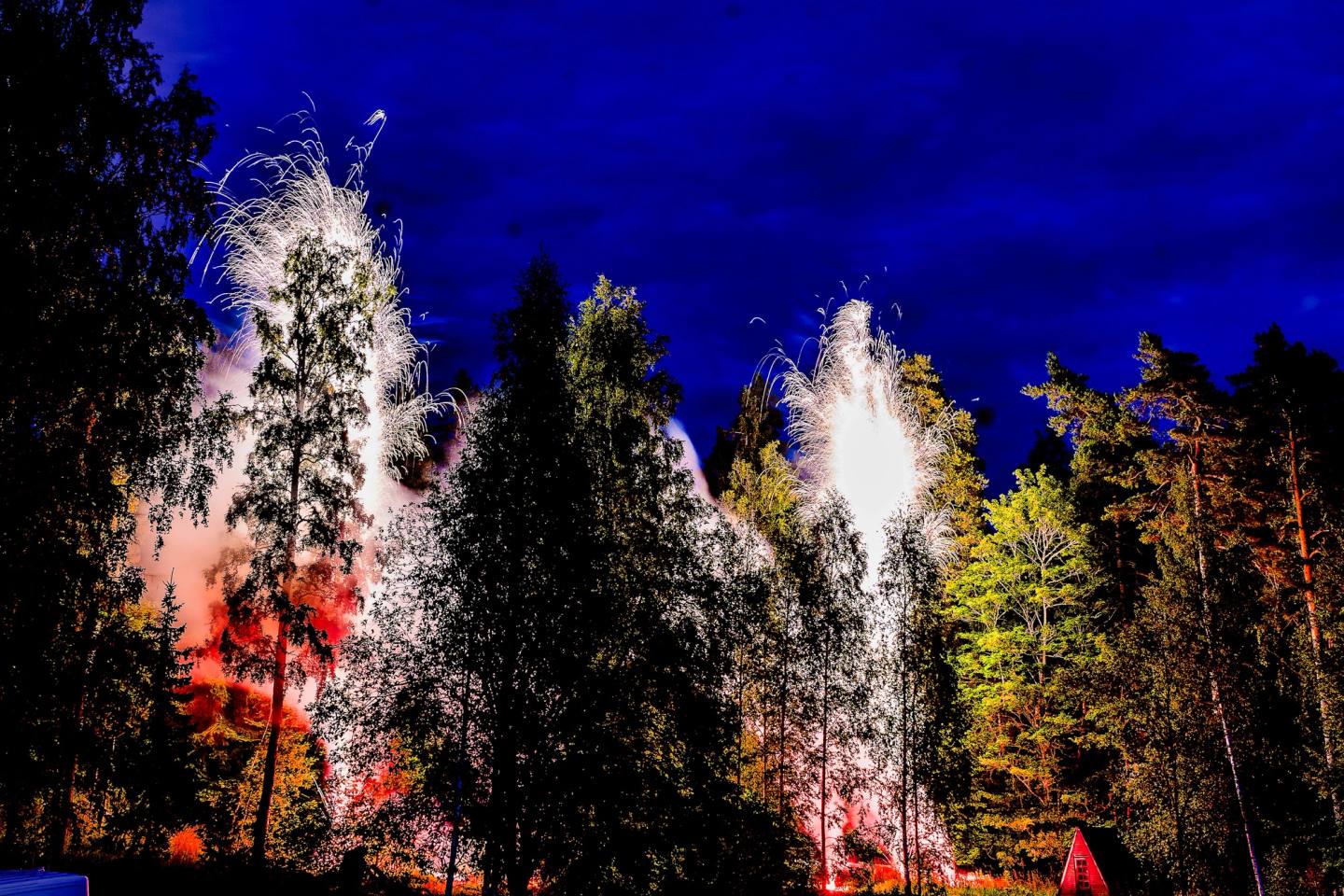
All combustion produces carbon dioxide (that is, CO2 emissions), and the burning of fireworks is no exception. To put the annual carbon dioxide emissions of fireworks in Finland into perspective, a forest fire covering just a few hectares releases more carbon dioxide into the atmosphere than the use of a whole year's imports of fireworks. As an aside, no fireworks are manufactured in Finland, so all of them are imported (mainly from China). If a firework's cardboard casing is burned, burning that ordinary cardboard produces more CO2 emissions and harmful fine particles than the pyrotechnic composition does when the firework is set off. Black powder is about 15% carbon. By comparison, about 50% of the dry weight of wood is carbon. The carbon in black powder is not coal from fossil sources but charcoal. In terms of CO2 emissions, setting off fireworks is therefore close to carbon neutral to begin with.
Over the whole life cycle of a firework, the carbon footprint is nothing like that of a mobile phone, for example. Manufacturing fireworks requires hardly any energy, expensive production plants or other stages that place a heavy burden on the environment. It is largely manual work or work done with fairly simple machines. The life cycle of fireworks does not consume rare metals, and no rainforests are felled for it.
It should be noted that the largest emissions from fireworks come from transport during the life cycle of the fireworks and their components. Here, in the country where the fireworks are used, the biggest form of pollution is noise. It disturbs some people and animals when a fireworks display is held, and on New Year's Eve and at venetsialaiset, the end-of-summer Venetian night, when consumers are allowed to use fireworks bought from shops. This is unfortunate for those who suffer most from the noise. The law defines precisely how loud the bangs from fireworks may be, and where and when fireworks may be used. Yet there are countless individual things in the world that briefly disturb someone's life or cause upset. We would see it as an injustice if fireworks were banned. We offer our humblest sympathy to those who are troubled by the noise of fireworks. Unfortunately, the only way we can serve this group is by offering reminders of how, for example, to get pets used to the bangs or to draw a pet's attention elsewhere while they last. Our company also has a dog trainer on its staff who understands animal behaviour, and what we say draws on that expertise.
Quick tips for helping animals that are afraid of fireworks
Do not walk your pet during a nearby fireworks display if it is afraid of the bangs. Fireworks displays are usually announced in the media, or the nearest neighbours are told. As a general rule, fireworks may be used on New Year's Eve from 6 pm to 2 am, and in many regions at venetsialaiset on the last Saturday of August. During August, the local rescue department's announcement tells you in more detail whether fireworks are allowed at venetsialaiset, and where and when. In city centres, the use of fireworks by consumers is often restricted.
You can make your pet pay less attention to the fireworks, or even none at all, by having other sound in the home, such as keeping the television or radio on or playing music. Ordinary New Year celebrations and socialising at home also create a sense of security. When owners become stressed or tense on their animal's behalf, the animal usually senses it and starts to feel afraid. So it is worth staying in as good a mood as possible and spending the time in a relaxed way. This often tells the animal that everything is fine. If your home has a room where the bangs are least audible, it is worth spending time there with your pet where possible. On the other hand, desensitisation to sounds can be good for many animals and teach them not to be afraid of even the more unusual sounds. Every animal and person is an individual, however, and these tips will help most of them.
Litter from fireworks

Litter from fireworks displays is collected by the company that put on the display. Only a few shreds of biodegradable cardboard are left in the environment, if that. The fireworks used by consumers on New Year's Eve and at venetsialaiset unfortunately do leave litter in the environment, in the same way that some people leave their rubbish in nature after a picnic. This is reprehensible, and littering is also an offence. Fortunately, in urban areas the street-cleaning service always swings into action after New Year, just as it is stepped up around May Day and during the summer, for example. Perhaps the worst place to litter is the countryside, because public cleaning services do not reach it.
Fireworks have taken a big step forward when it comes to litter: their plastic parts are being phased out and replaced with 100% biodegradable parts. This is only the beginning, though: consumer fireworks with ordinary plastic parts are still on the market, but there are fewer of them all the time. In all the stick rockets that Rakettikeiju brought to market in 2020, the plastic nose cones and all other parts have been replaced with the bio-based wood composite mentioned above and a product made from plant-based binders. This does not affect the appearance or the visual impact of the firework in any way. The material decomposes in the same time as a piece of wood of the same size. Under EU food regulations, the same wood composite could also be used as packaging material for food. All litter from used, fully spent fireworks belongs in energy waste, except for the metal sticks left over from sparklers, which go to metal recycling instead. In other words, firework litter is turned into electricity and heat in further processing, and the sticks from sparklers into new metal products. Pyroten Oy salutes these advances and takes the green principle into account in everything it does, wherever improvement is possible.
No child labour
The fireworks used in Finland are not made with child labour. The manufacture of fireworks in Chinese factories is monitored regularly, and humane working conditions are ensured, such as reasonable wages, working hours that stay within limits and adequate occupational safety. Child labour is completely prohibited for fireworks entering the European Union. The factories are monitored both by Finns and by national inspectors. Fireworks are thus monitored in exactly the same way as, for example, product checks on toys entering Europe. Fireworks prices have been on an upward trend so that workers can be paid more and given safer working conditions. Working conditions in fireworks manufacturing used to be worse, as they were in other factory work. Work to improve conditions continues all the time, because standards are never so high that they cannot be improved.
Injuries caused by fireworks
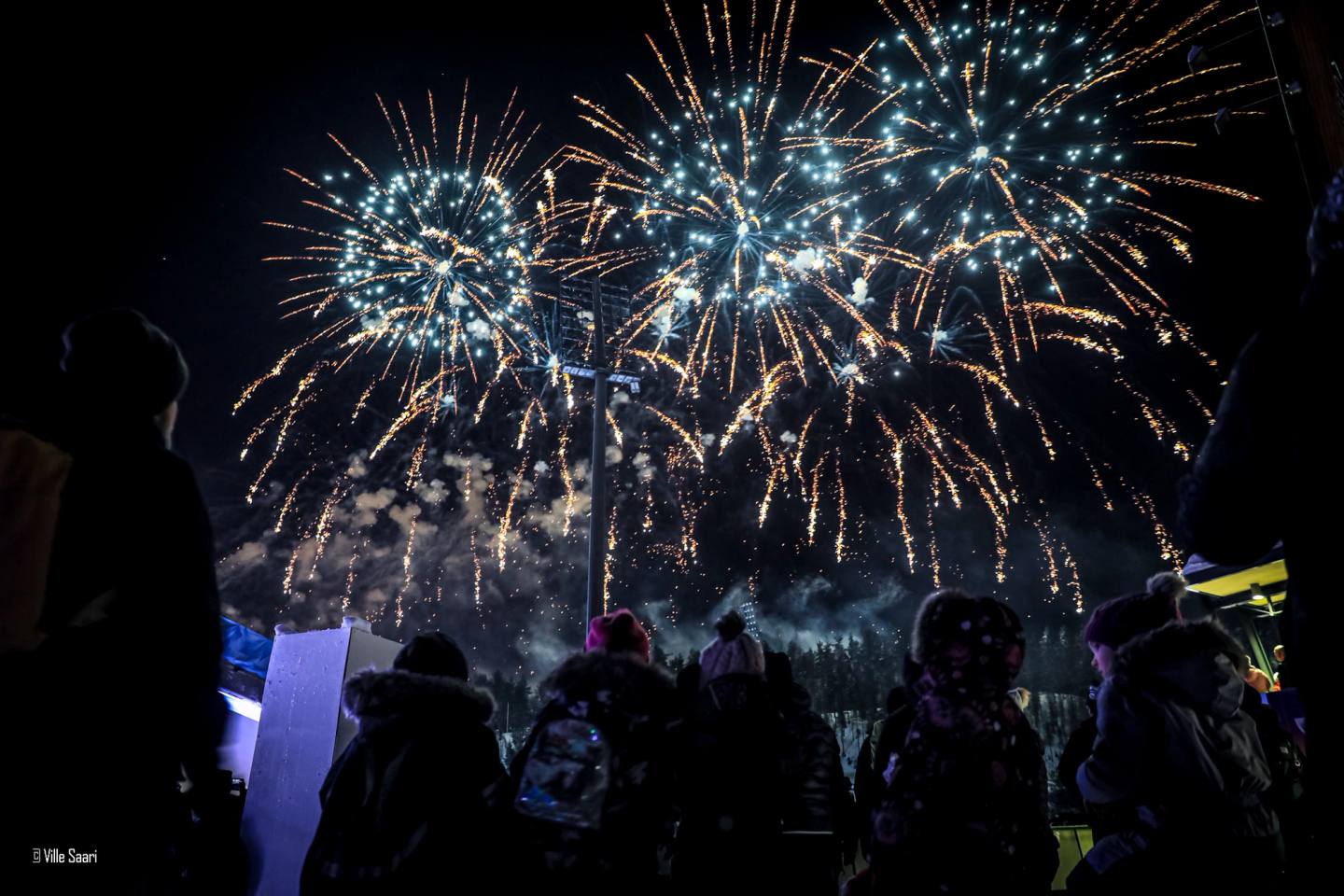
Fireworks displays have hardly ever caused an eye injury or any other injury in Finland. In the history of Pyroten Oy, there have been no injuries caused by fireworks and no significant dangerous incidents at all. Fireworks displays organised by professionals are extremely safe because the firers are trained, safety distances are observed and safety plans are drawn up for each display.
The fireworks used are always tested before they reach the user, whether that user is a professional using professional fireworks or a consumer buying a product in a shop. Every batch manufactured is tested. In Finland, PITE ry, the fireworks industry association, continually develops common rules and guidelines that companies in the sector follow in their operations to improve and maintain safety.
The use of consumer fireworks causes a few eye and limb injuries in Finland each year. This is because hundreds of thousands of people use consumer fireworks every year. The most common limb injuries are hand injuries. Fortunately, only very rarely has anyone lost their sight permanently or suffered some other irreversible injury. Sadly, there have been a few such cases over the years too. Even so, in relation to the number of users, the injuries that fireworks cause to consumers are so marginal that almost any other leisure activity or amusement causes at least as many serious injuries. Most injuries from fireworks are due to people ignoring the requirement to wear safety goggles (compulsory for anyone using fireworks) and to the misuse of fireworks. Used correctly, a firework is an extremely safe device.
On these grounds, we as experts in the field would regard a ban on fireworks as an injustice, should one ever come. However, we believe that decision-makers are clear-headed and thoroughly familiar with the subject, and we trust that a ban will never happen. When we were children, the joy that fireworks brought us at New Year was immeasurable, and we still see exactly the same thing in children's faces on New Year's Eve as their parents and older siblings set off fireworks safely. Remember your safety goggles, and have fun together in the glow of the colours!
This text was produced by Pyroten's professionals in collaboration with a chemist who holds a degree in inorganic and analytical chemistry and specialises in the chemistry of explosives.